A Country Built on Courage: The History of Canada and the People Who Chose to Begin Again
A Country Built on Courage: The History of Canada and the People Who Chose to Begin Again
The history of Canada is, at its core, the story of relocation, immigration, and reinvention.
On a cold morning in Halifax a century ago, ships docked quietly at Pier 21.
Families stepped onto Canadian soil carrying wooden trunks, a few coins — and uncertainty.
They didn’t know if they would succeed.
They didn’t know if they would stay.
They only knew they were willing to try.
That moment has repeated itself for more than 150 years.
Because Canada is not just a country.
It is a decision — made by millions — to begin again.
Before Confederation: Indigenous Foundations of Canada
Long before European arrival, this land was home to Indigenous peoples — First Nations, Inuit, and Métis communities — whose histories stretch back thousands of years.
Their governance systems, trade routes, and cultural traditions formed the earliest foundations of modern Canada.
In 1867, the passage of the British North America Act united provinces into the Dominion of Canada.
Unlike many nations built around a single identity, Canada emerged through negotiation — linguistic, cultural, political, and geographic.
That complexity continues to shape the country today.
The Canadian Pacific Railway and National Expansion
In the late 1800s, the completion of the Canadian Pacific Railway transformed Canada’s economic future.
It:
-
Connected the Atlantic to the Pacific
-
Opened Western farmland
-
Enabled large-scale interprovincial migration
-
Created national trade corridors
But beyond infrastructure, it symbolized mobility.
Workers moved west for land.
Entrepreneurs moved east for trade.
Families relocated wherever opportunity appeared.
Mobility became embedded in Canadian identity.
Pier 21: Canada’s Gateway for Immigrants
Between 1928 and 1971, more than one million immigrants passed through Pier 21 in Halifax.
They arrived:
-
From Italy after World War II
-
From Ukraine seeking farmland
-
From China despite exclusionary policies
-
From India, the Philippines, Lebanon, Nigeria, Colombia, and beyond
Many started over in small apartments.
Many accepted work below their qualifications.
Many endured harsh winters and uncertainty.
But over time:
-
Businesses opened
-
Homes were purchased
-
Children graduated from Canadian universities
-
Communities flourished
Canada developed a reputation not for instant success — but for long-term opportunity.
Multiculturalism in Canada: A Defining Policy
In 1971, Canada became the first country in the world to adopt official multiculturalism policy.
This established a powerful principle:
Integration did not require erasure.
New Canadians could:
-
Speak their native language at home
-
Practice their faith
-
Celebrate cultural traditions
-
Participate fully in civic life
Cities like Toronto, Vancouver, Calgary, and Montreal became some of the most diverse urban centers in the world.
Today, diversity is not accidental in Canada.
It is structural.
Why People Still Move to Canada Today
Search trends for “why move to Canada” and “Canada immigration opportunities” remain high.
Modern motivations include:
-
Economic stability
-
Education systems
-
Universal healthcare
-
Political transparency
-
Safety and governance
-
Professional opportunity
For example:
-
Toronto attracts finance and tech professionals
-
Calgary draws families seeking affordable housing
-
Vancouver serves as a Pacific trade gateway
-
Ottawa offers government and public sector careers
From an economic lens, migration supports national growth.
From a human lens, it represents sustainable life-building.
Interprovincial Migration: Movement Within Canada
Canada’s story is not only about international immigration.
It is also about movement within its borders.
Common relocation routes include:
-
Vancouver → Toronto
-
Toronto → Calgary
-
Montreal → Ottawa
-
Rural towns → Urban centers
Each move represents:
-
A new job contract
-
A new mortgage
-
A new school enrollment
-
A recalibrated future
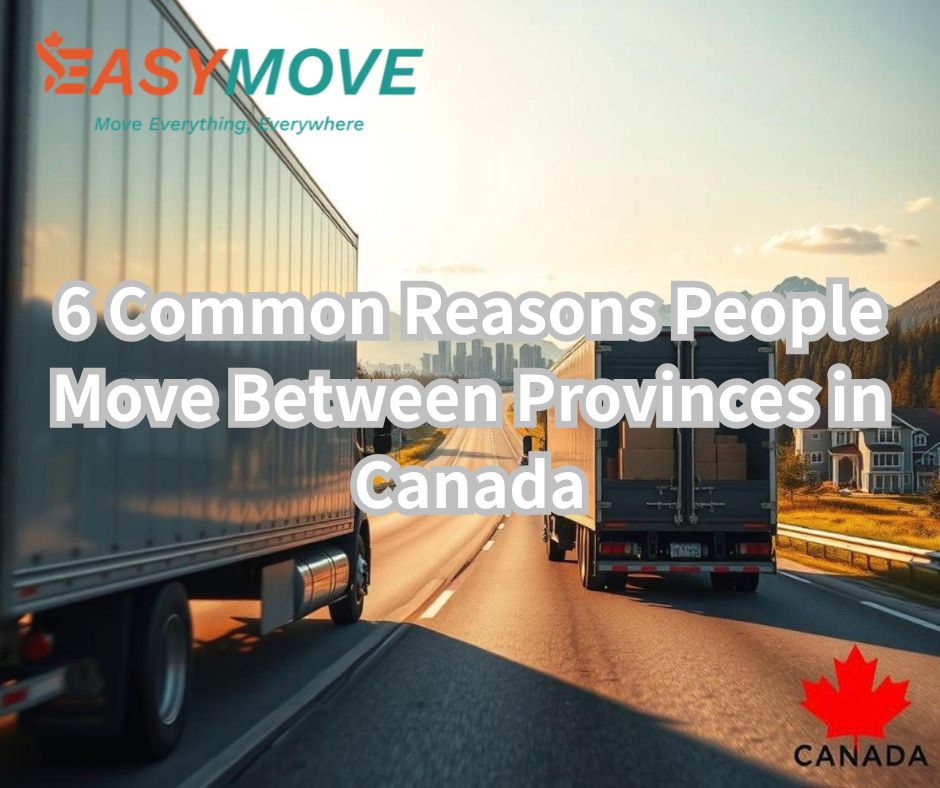
Behind every moving truck on a Canadian highway is a family making a strategic decision.
Canada Is Continuously Becoming
Unlike nations defined by rigid historical identity, Canada is defined by evolution.
It grows through:
-
Infrastructure
-
Immigration
-
Economic mobility
-
Interprovincial relocation
-
Education systems
-
Policy development
Its history is not static.
It is layered — generation after generation of people beginning again.
The Emotional Reality of Relocation
Relocation — whether cross-border or interprovincial — carries risk:
-
Financial uncertainty
-
Career transitions
-
Cultural adjustment
-
Emotional strain
Yet historically, stability in Canada has often followed courage.
Every generation faced uncertainty.
Over time, many found opportunity.
Canada’s Story Is Still Being Written
Today, Canada’s narrative continues:
-
In airports welcoming new arrivals
-
On highways connecting provinces
-
In classrooms filled with international students
-
In office towers housing global companies
-
In suburban neighborhoods expanding each year
Every immigrant.
Every interprovincial move.
Every family relocation.
Adds another chapter.
Canada is not just a country you arrive in.
It is a country you help build.
Frequently Asked Questions About Canada’s History, Immigration & Mobility
1. Why is Canada known as a country of immigrants?
Canada is often described as a country of immigrants because a large percentage of its population was born outside the country or has immigrant parents. Since the late 19th century, Canada has welcomed waves of newcomers from Europe, Asia, Africa, the Middle East, and Latin America.
In 1971, Canada became the first country in the world to adopt official multiculturalism policy, reinforcing its identity as a diverse and immigrant-friendly nation.
Today, immigration to Canada remains a key driver of economic growth and demographic stability.
2. When did Canada officially become a country?
Canada officially became a country on July 1, 1867, through Confederation under the British North America Act.
At that time, four provinces — Ontario, Quebec, New Brunswick, and Nova Scotia — formed the Dominion of Canada.
Over time, additional provinces and territories joined, shaping modern Canadian Confederation.
3. What role did immigration play in building Canada’s economy?
Immigration in Canada has played a central role in national development:
-
Workers helped build the Canadian Pacific Railway
-
Farmers settled the Prairies
-
Entrepreneurs opened businesses in expanding cities
-
Skilled professionals strengthened finance, healthcare, construction, and technology sectors
Today, immigration supports Canada’s labor market, innovation economy, and long-term housing demand across provinces.
4. Why do people still move to Canada today?
People relocate for a combination of economic opportunity and quality of life, including:
-
Stable political system
-
Public healthcare system
-
Education opportunities
-
Transparent legal framework
-
Strong labor protections
-
Pathways to permanent residency and citizenship
Canada is globally recognized for safety, multicultural communities, and long-term career growth.
5. Which provinces attract the most newcomers in Canada?
Ontario consistently attracts the highest number of newcomers, particularly the Greater Toronto Area, due to strong job opportunities in finance, tech, healthcare, and professional services.
Other popular provinces include:
-
British Columbia (especially Vancouver)
-
Alberta (notably Calgary and Edmonton)
-
Quebec (primarily Montreal)
Each province offers distinct economic advantages, housing markets, and lifestyle options.
6. Why do people move between provinces in Canada?
Interprovincial migration in Canada is common. People relocate for:
-
Job promotions or corporate transfers
-
Lower housing costs
-
Better work-life balance
-
Education opportunities
-
Business expansion
For example, many families move from higher-cost cities like Toronto or Vancouver to Alberta for more affordable home ownership.
7. Is Canada’s multiculturalism just symbolic?
No. Canadian multiculturalism is embedded in federal policy, education systems, and public institutions.
The government funds cultural initiatives, protects language rights, and enforces anti-discrimination laws. Major cities reflect this diversity through multilingual communities, international festivals, and global business connections.
Multiculturalism is both a social value and an economic strength.
8. How has internal mobility shaped modern Canada?
Internal mobility in Canada — moving between provinces — plays a critical role in the national economy.
As industries shift, housing markets fluctuate, and labor demand changes, Canadians relocate accordingly. This supports economic balance between regions and maintains a flexible workforce.
Mobility reflects long-term planning for career advancement, home ownership, and family growth.
9. What makes Canada different from other immigration destinations?
Canada stands out for:
-
Structured immigration pathways such as Express Entry and Provincial Nominee Programs (PNP)
-
High quality of life rankings
-
Strong public services
-
Institutional commitment to diversity and inclusion
-
A clear route to Canadian citizenship
Unlike countries that treat immigration primarily as temporary labor, Canada integrates newcomers into its long-term social and economic framework.
10. Is Canada still growing through immigration?
Yes. Immigration remains central to Canada’s population growth strategy.
With an aging population and labor shortages in healthcare, construction, logistics, and technology, Canada continues to welcome:
-
Skilled workers
-
Entrepreneurs
-
International students
-
Family reunification applicants
Immigration is not only part of Canada’s history — it is fundamental to Canada’s future growth.
Phone/WhatsApp :+1 6472688698
Email: [email protected] (General Inquiry)
Website: https://www.caeasymove.com